China → Canada freight · DDP door to door info@hsjy-sc.com · +86 139 2743 0130 · WhatsApp
Get a quote in 24h
Sea freight · FCL & LCL

Sea freight from China to Canada, port to door.

Direct transpacific services into Vancouver and Prince Rupert, east-coast services into Montreal and Halifax, and CN / CPKC rail inland. FCL from a single pallet's worth of space to full 40HQ and 45HQ containers; LCL groupage from 1 CBM.

Transit14–20 days to Vancouver
FCL20GP · 40GP · 40HQ · 45HQ
LCLFrom 1 CBM, weekly groupage
InlandCN / CPKC rail to Toronto

FCL — full container load

One container, your cargo only, sealed from our warehouse to the Canadian destination. This is the cheapest way to move volume once you are past roughly 13–15 CBM, and the only way to control loading, stowage and transit without sharing space with strangers.

ContainerUsable volumePayloadTypical use
20GP~28–33 CBM~21–22 tDense cargo, machinery, tiles, 8–10 pallets
40GP~58–60 CBM~26 tVolume goods, furniture, cartons
40HQ~65–68 CBM~26 tLight bulky cargo — the default for e-commerce volume
45HQ~76 CBM~26 tVery light bulky cargo where the route allows it

Both limits bind. Cargo can be too heavy for a 40HQ long before it is too big, and too big before it is anywhere near the weight limit — which is why the chargeable-volume maths has to be done before the booking, not at the port.

Containers stacked at a Chinese port before loading to Canada
Routing

Which port, and why it matters more than the rate

A cheap sailing into the wrong coast is an expensive shipment. Two containers booked the same week can differ by a week of rail time purely because of the port and the inland terminal behind it.

  • VancouverMost sailings, best frequency, busiest in Q4
  • Prince RupertFewer sailings, often faster to Toronto and the Midwest
  • MontrealEast-coast routing, good for Quebec and Atlantic Canada
  • HalifaxAtlantic Canada and transatlantic combinations
Get a port recommendation
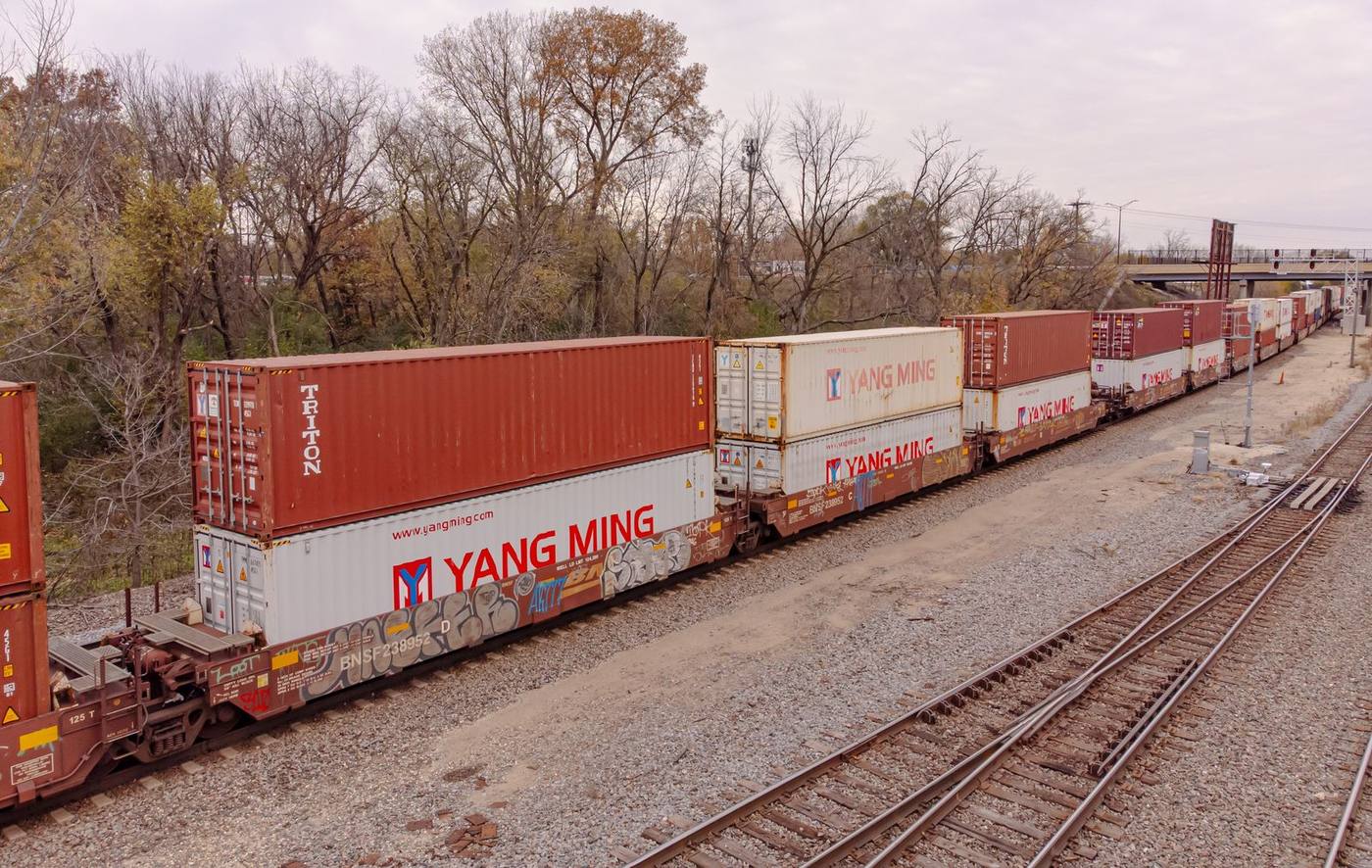
Double-stacked intermodal container train
Illustrative image: double-stacked intermodal rail — the leg that moves containers from Vancouver to Toronto.

LCL — groupage from 1 CBM

Your cargo shares a container with other shippers' cargo, and you pay for the space you use. It is the right answer for a first order, a sample shipment, or a product you are still testing — and it is the wrong answer once you are shipping the same volume every month, because the consolidation wait and the destination charges do not shrink with your share of the box.

What you pay for in LCLCharged onWhy it matters
Ocean freightPer revenue tonne (greater of CBM or tonnes)Heavy cargo is billed on weight, light cargo on volume
ConsolidationPer CBM, at originIncludes the wait until the container is full
Destination chargesPer bill of lading, largely fixedThese do not fall as your volume grows — the crossover point with FCL
De-consolidationPer CBM or per shipmentUnstuffing and sorting in the port city

Heavy or bulky? The W/M rule decides

LCL is billed on revenue tonnes: whichever is greater, your cubic metres or your weight in tonnes. Furniture is billed on volume, machine parts on weight. If your cargo is denser than about 1,000 kg per CBM, LCL is charging you for weight you cannot avoid — and air freight may be closer in price than you expect.

Get a sea freight price for your cargo

Tell us the goods, the weight or CBM, the Chinese pickup city and the Canadian postal code. You get one all-in number: freight, Canadian duty and tax, clearance and delivery.

Sea freight to Canada — questions

Is FCL or LCL better for Canada?

Below roughly 13–15 CBM per shipment, LCL groupage usually wins on cost. Above that, a 20GP becomes cheaper per cubic metre — and much more predictable, because LCL waits for other people's cargo before the container can load. A 20GP holds about 28–33 CBM usable, a 40HQ about 65–68 CBM.

Which Canadian port should I ship into?

West coast for anything west of Ontario: Vancouver and Prince Rupert, with Prince Rupert often faster to Toronto and the US Midwest because containers clear the port and load straight onto CN rail. Montreal and Halifax suit European routings and eastern Canada. We choose per shipment based on your postal code and the sailing schedule, not on habit.

How does rail work once the container lands?

The container is discharged at the port, cleared by CBSA, then moved on CN or CPKC to an inland terminal — Toronto, Calgary, Edmonton or Montreal. Rail is typically 4–7 days from Vancouver to Toronto. On DDP we book the rail leg and the final delivery as part of the same price.

What documents do I need for sea freight to Canada?

Commercial invoice with a correct description and HS code, packing list with weights and dimensions, bill of lading, and a Canadian Business Number with an RM import account if you are the importer of record. Under DDP we clear on our own importer arrangement, so you only supply the commercial documents.

Can you handle oversized or heavy cargo?

Yes — flat racks, open tops, out-of-gauge machinery and project cargo, subject to the inland route. Oversize cargo needs a trucking permit on the Canadian side, and rail has height and weight limits that change by corridor, so we check the route before booking rather than after.
Sea freight, quoted properly

Send the carton count and dimensions, the goods and the Canadian postal code. FCL and LCL priced side by side, with the rail and delivery leg included.

WhatsApp for a 24h quote